


Innovation is nothing new
Paul Botje of the Museum of Brands reveals how packaging innovation is a continuous journey shaped by history, materials, and consumer needs.
Innovation often feels like a force of the future – restless, relentless, always reaching forward. Yet, beneath this forward thrust lies a story as old as commerce itself. Long before today's sleek, sustainable materials and smart technologies, brands were already pushing boundaries, experimenting with form, colour, typography, and function to capture attention and express identity. What we now call ‘innovation’ has always been at the heart of branding, quietly evolving with each new era.
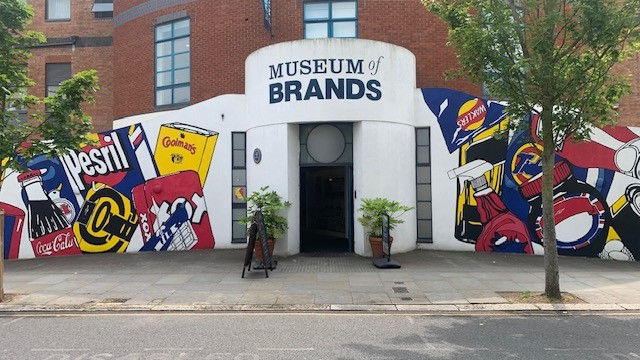
To truly appreciate this journey, there is no better place than the Museum of Brands, a treasure trove of a million memories, where the history of packaging becomes a walk down memory lane. The museum's unique magic lies in nostalgia, but its message is deeply contemporary. It reminds us that while packaging changes with the times, products often don't, and this emotional continuity, this tether to personal experience, makes brands so powerful. As the museum's story reveals, innovation doesn't appear fully formed. It's cumulative; a process shaped by precedent. What we see on today's shelves – refined, reduced, reimagined – is often a continuation of experiments that began decades ago. Every minimalist carton, every biodegradable clasp, carries with it echoes of earlier choices made under long forgotten constraints. Understanding this path gives depth to the present and direction to the future.
That future is on full display at London Packaging Week, which celebrates its 15th anniversary this October. Paul Botje, the director of the Museum of Brands and a featured speaker at this year's London Packaging Week, brings these two worlds together: past and future, memory and momentum.

Learning from history
At first glance, ‘Innovation is Nothing New’ reads like a contradiction. But this apparent paradox lies at the heart of the Museum of Brands' exploration into the evolution of packaging. As Paul explains, the title for his session at London Packaging Week isn't just a slight provocation, it is a gateway into a longer, richer story about how innovation isn't the sudden arrival of the new but the ongoing refinement of ideas that stretch back thousands of years.
‘The key message really is in the title,’ Paul said. ‘Innovation is not anything new. The word innovation means it is new, but the concept is not new because innovation (in packaging) has been around for a long time.’
That story begins not with modern branding or industrial materials but with a far more primal moment. Imagine a figure in the Stone Age discovering a beehive and wanting to bring honey back to the tribe. ‘The only thing he has to carry it with is a leaf,’ Paul continued. ‘That is the first example of packaging we can think of.’ Packaging was born from this moment of necessity; a simple leaf repurposed as a vessel. What followed was a continuous process of improvement: more durable materials, more intentional design, and, eventually, more complex functions like communication and persuasion.
By the time we reach ancient Rome, packaging was no longer just practical; it had begun to speak. Merchants didn't just sell wine; they branded it. ‘There is some evidence of the first branded packaging back in Roman times... a particular wine merchant started putting his name and the address of his shop on the wine amphorae. That would be a very early iteration of branded packaging.’ With this act, the packaging object became more than a container. It became a message, a mark of identity, a promise of origin and quality and ultimately a marketing tool.
This continuity between function and innovation is central to understanding how packaging evolves. While materials have changed dramatically, the forces behind those changes remain remarkably consistent. Paul points out that decisions around packaging are rarely just aesthetic; they are economic, logistical, and, increasingly, environmental. ‘Obviously, we used to do everything in glass bottles, and now we do everything in plastic,’ he explained. ‘What is that driven by? Mainly cost, but also sustainability. The weight of glass versus plastic makes a big difference. In a large consignment travelling by truck, you are talking about a two or three tonne difference in weight.’ In other words, innovation emerges not only from creativity but also from constraints posed by transport, scale, and a shifting sense of responsibility to the planet.
It becomes clear then that the past is not something to be discarded in the rush toward innovation; it is something to be studied. Every leap forward in packaging has roots in what came before. And for Paul, that is the ultimate lesson: if we want to understand the future of design, sustainability, and consumer behaviour, we must first understand its history. ‘For future innovation, any innovation that is going to happen – you can look to the past, learn from how it happened, and potentially shape your packaging innovation going forward by examining the factors that have influenced packaging innovation in the past.’
Interwoven dynamics of innovation
Packaging innovation today exists within a complex web of influences, which Paul describes as a ‘big bowl of spaghetti’, where pulling one strand inevitably tugs on many others, in an age defined by rapid communication, new ideas spread globally faster than ever before, accelerating the pace at which innovations can be adopted and adapted.
Innovation often arrives unexpectedly. Paul commented, ‘Who knew 15 years ago that digital printing would revolutionise packaging?’ Alongside printing advances, even small components like closures are being redesigned – for example, tethered caps that improve recyclability are now gaining traction, driven by sustainability and legislation, but enabled by digital printing.
One of Paul's favourite examples is toothpaste packaging, which reveals how convenience, cost, and sustainability can drive evolution. ‘It started as a powder in pouches or little metal boxes applied with your fingers and activated by your saliva,’ he recalled, ‘then came the tube with a paste rather than a powder, the first tubes being made of metal, then from plastic.’ While the toothpaste formula has remained relatively unchanged, ‘the packaging certainly has,’ evolving to optimise user friendliness, environmental impact, and market appeal.
Ultimately, it is clear that convenience, cost, quality, and sustainability are all key drivers in packaging innovation. Paul sums it up: ‘What we see in the museum reflects how things evolved to ever improved versions of themselves. But the future? That is even more exciting. We don't know exactly what innovations are coming, but if history is any guide, it will be extraordinary.’
Exploring the evolution of packaging through the Museum's permanent exhibition in the ‘Time Tunnel’ offers a vivid glimpse into how brands have transformed over the years. Paul highlights examples like ‘the 15 different versions of Sun-Pat peanut butter jars or the changing Milk Tray boxes’, illustrating that packaging changes are never random. Instead, they ‘respond to shifting materials, design capabilities, branding needs, and functional requirements’. This evolution reflects the dynamic interplay between practical demands and creative expression.
Paul draws a compelling analogy to human creativity, observing that ‘the human brain is amazing – it never stops creating’. Just as music continuously reinvents itself despite using the same 12 notes, packaging innovation draws from the past while pushing forward. ‘People draw inspiration from the past, analyse how and why things changed, and apply those insights to today's products,’ he explained. Packaging remains an exciting and ever evolving field with ‘new designs, colour combinations and branding approaches’ that are constantly emerging.
In the digital age, the explosion of communication has fundamentally reshaped consumer expectations around packaging. Today, before purchasing, ‘the first thing most people do is check the product reviews – and these reviews often include comments on packaging’. Consumers are quick to notice when packaging falls short, pointing out if ‘a box is too bulky’, if ‘there is too much air in a container’, or if ‘materials feel excessive or cheap’.
When enough consumers speak up, brands listen. ‘In today's competitive and transparent landscape, every part of the product, including its packaging, has to be spot on. One misstep and a competitor will seize the opportunity,’ Paul noted. The power of public opinion is evident in stories like that of the Tate & Lyle golden syrup tin. The classic green tin featuring ‘a dead lion and bees’, a reference to a biblical story, was once redesigned for the plastic bottle packaging when Tate & Lyle wanted to update the brand with a more modern image. However, the public (mainly Christian) backlash was so strong that the brand had to publicly defend its decision. This episode underscores how deeply packaging and branding are intertwined, carrying emotional significance for consumers.
At the Museum of Brands, the focus may primarily be on branding, but Paul emphasises that ‘packaging is inseparable from it’. While two generic cornflake boxes might look similar, packaging like ‘a Marmite jar or a Tate & Lyle tin is instantly recognisable’. Beyond identification, packaging also communicates quality perceptions. For example, honey in a plastic squeezy bottle versus a glass jar is a great example. Same product, but the glass jar feels premium, allowing brands to charge more. This subtle yet powerful influence shapes consumer choice and brand positioning alike.
The living pulse of packaging
When it comes to packaging, standing out in a crowded market is key. As Paul points out, ‘Think about something simple like jam. You might have one brand in a traditional glass jar, which conveys quality but can be heavy and fragile, especially tricky if you have got small children. Compare that to a squeezy bottle version: lightweight, safer, and easier to use.’ This contrast highlights how packaging innovation caters to different consumer needs. ‘The functionality is different, the target audience is different, and the price point might be. That is innovation – serving varied consumer needs through smart packaging choices.’
Packaging has long been shaped by multiple factors: consumer convenience, sustainability, production capability, material evolution, and branding. This isn't new. Paul reminds us that ‘we have been innovating for centuries. Just look back to the earliest merchants who branded their wine bottles to sell a product and create recognition and trust. That merchant's name on a bottle meant, 'This is good stuff, come back for more.' In many ways, it is the same today.’
At the Museum of Brands, this history is vividly brought to life. Visitors experience the Time Tunnel – a chronological journey through British consumer culture where you walk through a long corridor with glass cases on either side filled with original products, packaging, and artefacts, each from a specific decade. From muted Victorian tones, greys, blacks, dark greens, to the explosion of colour and complexity in the 1960s and the busy, layered designs of the 1990s, the evolution of packaging mirrors societal change. What is on the shelf tells you everything about the era it came from.
But it is not just aesthetics, materials have played a crucial role, too. Paul explained, ‘In the early days before glass became common, most packaging was made of clay because it was very difficult for furnaces to get hot enough to melt sand into glass. When heating technology enabled glass blowing, it changed everything. Suddenly, expensive products could be presented in beautiful, transparent containers with complex shapes. That wasn't just a practical shift but a signal of quality and luxury.’
And glass colours had beside aesthetics also a function: clear to show off the colour of the liquid inside, blue to preserve medicinal qualities and brown to keep UV light out and so beer fresh.
This material evolution continues today, especially in the ongoing dialogue between plastic and paper. Having started his career in the paper industry 30 years ago, Paul reflected, ‘Even then, companies were replanting trees – three for every one they cut down. Paper has long been sustainable but is often invisible to consumers because it enters the product chain so early.’ Meanwhile, ‘plastic, while highly functional, has taken the brunt of environmental criticism. Rightly so perhaps, but it still has its place. A brown paper bag in the rain is a disaster; sometimes, plastic is the better option. We just need to be as responsible as we can with its use and disposal’.
Looking forward, Paul believes the key to future packaging innovation lies in learning from the past. ‘Not because old solutions were perfect, but because they often hold the key to solving modern challenges’ he said. The Museum of Brands isn't just a place for nostalgia; it is a source of inspiration. ‘If you are a packaging designer or developer, come spend a day here. You will see a hundred ideas that worked then and might just work again, either as they were or reimagined for today's needs,’ he explained.
Ultimately, innovation in packaging is a continuous loop. As Paul sums it up, ‘We pull from history, respond to modern pressures, and shape the future through the materials we choose, the messages we send, and the experiences we create. That's the power of packaging.’
This ongoing dialogue between past and future finds a perfect home in London Packaging Week. More than a milestone marking time, the event celebrates evolution – tracing the journey from hand drawn sketches to cutting edge sustainable solutions. It is a gathering place where pioneers and visionaries come together, crafting the next chapter in packaging's story.
At its heart, London Packaging Week reminds us that packaging is not just a container but a powerful voice that carries ideas, emotions, and innovation. It is where history inspires tomorrow's breakthroughs and where the quiet potential of a new design can become the next defining moment in the art and science of packaging.


Comments